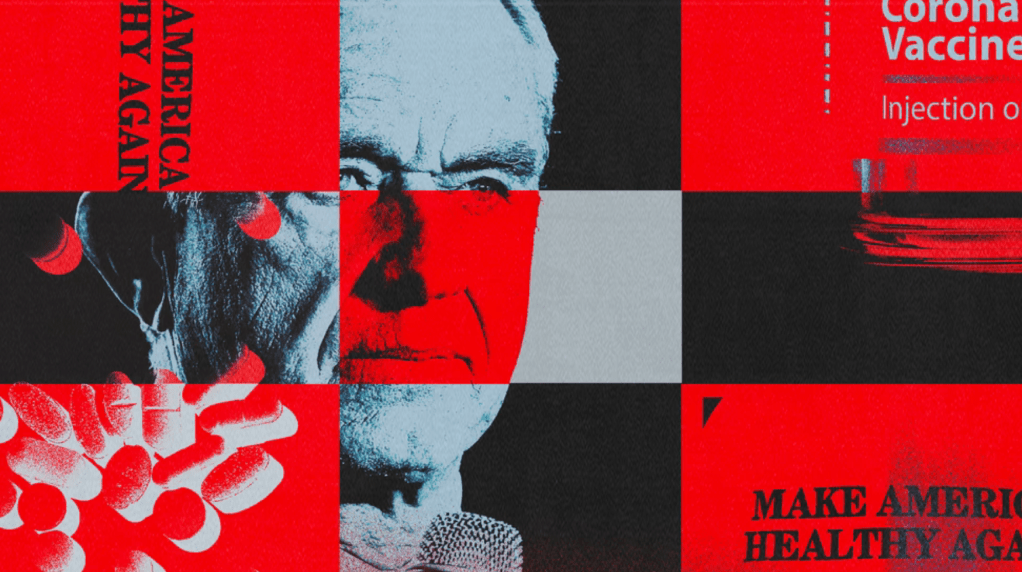
This is Derek Thompson piece from 2024 is still spot-in:
Robert F. Kennedy Jr. is a tangle of biographical ironies. He is an anti-elite renegade bearing the most elite surname in politics. Once feared for his left-wing radicalism when Barack Obama considered him for a Cabinet appointment in 2008, he has now been nominated to lead a major department for a right-wing administration.
A notorious vaccine skeptic, Kennedy is set to direct health policy under the president who oversaw Operation Warp Speed, the country’s most successful vaccine-development program.
These inconsistencies, along with Kennedy’s colorful history of interactions with the animal kingdom, have made him the object of relentless derision in the press. I’m not interested in taking Kennedy’s side in these debates; he has said many things that are plainly wrong.
The first, and most obvious, phenomenon that lofted Kennedy to power has been the long shadow cast by COVID. Much of his popularity is an echo of pandemic anger over perceptions of government overreach, including lockdowns, mask mandates, extended school closures, vaccine requirements, and what many see as the hypocritical and inconsistent application of these rules.
Kennedy’s outspoken position on vaccine safety has revealed—and also helped drive—the GOP-ification of the anti-vax position.
Until just a few years ago, vaccine skepticism was nonpartisan. It was associated both with a hippie approach to health, which chiefly appealed to affluent lefties, and with the doctrine of political liberty, which appealed more to conservatives. In Kennedy, these anxieties are fused. He both exaggerates the risks of vaccine ingredients and frames his objection to vaccination policies as a defense of personal choice.
President Joe Biden “violated one of the central principles of freedom” with the vaccine mandates, Kennedy said in a video posted to X earlier this year. Those views align him with the Republican Party, which has become much more distrustful of science and scientists in the past few years.
Kennedy’s vaccine skepticism must be placed in a broader context to understand its political power.
A lifelong crusader against corporations, Kennedy has few good things to say about almost any technological invention.
He has voiced histrionic fears about nuclear reactors, said that Wi-Fi can cause “leaky brain,” suggested that chemicals in the water supply might make kids transgender, wondered aloud if Prozac might contribute to school shootings, and posted support for the so-called chemtrails conspiracy, which holds that the government uses the contrails, or condensation trails, of jetliners to spread toxic chemicals. [He is also scared of using a microwave.]
At the same time, he is a big fan of products and behaviors that predate, say, modern agriculture.
In October, he pledged to end the FDA’s “aggressive suppression” of, among other things, “raw milk,” “clean foods,” “exercise,” and “sunshine.”
This primitive romanticism is the core of the modern Republican Party. To the extent that any single attitude unites the motley coalitions under Donald Trump, it is a pervasive distrust of incumbents, establishments, and legacy organizations.
In Pew Research surveys, less than half of Republicans say they believe that higher education, Big Business, tech firms, the media, the entertainment industry, or unions have a positive effect on society.
Although more than 60 percent of Democrats say they trust a variety of news organizations, including CNN and The New York Times, there is not one media company that more than 60 percent of Republicans say they trust, including Fox News.
One common explanation for Democrats’ recent losses among young and nonwhite voters is the “diploma divide.” College-educated Americans are moving left, while less-educated Americans are moving right.
Kennedy’s rise reveals a similar but distinct phenomenon, which is the “institutional-trust divide.” As the Vox writer Eric Levitz pointed out, young, nonwhite, and less-educated voters tend to have less trust in major institutions. They are more interested in “a paranoid vision of American life and a populist contempt for the nation’s political system,” he wrote.
And these are precisely the groups that are moving fastest away from the Democratic Party. One might say that Democrats have become the party of bureaucratic rules, with their emphasis on guardrails and their appeals to democracy, while the GOP has become the party of anti-establishment rulers—swashbuckling outsiders who pledge to use their power to burn down the system.
Kennedy is also at the forefront of fitness politics. Since joining the Trump campaign, Kennedy has launched a spin-off movement: MAHA, or “Make America healthy again.” Brad Stulberg, a personal-development author and faculty member at the University of Michigan School of Public Health, told me that he sees MAHA as emblematic of an emerging phenomenon, which he calls “performative health.”
Whereas personal health is a just-the-basics approach to diet and exercise, Stulberg defines performative health as “a macho aesthetic” that messily combines a distrust of FDA-approved therapies, an enthusiasm for supplements, and a fixation with manly strength, especially strength that can be captured by front-facing cameras in gyms and posted to social media.
Performative health is overtly masculine, Stulberg told me, and Kennedy is its champion, with his exercise videos, his relentless criticisms of the FDA, his reliance on vitamins and supplements, and his endorsement of testosterone-replacement therapy.
How can someone be a skeptic of federally approved therapies that have gone through rounds of clinical testing, but also an outspoken fan of infrequently tested (or untested) supplements and risky drug regimens?
One possibility goes back to institutions: Therapeutics that carry the stink of the FDA and Big Pharma are automatically questionable.
Another explanation is that supplements, vitamins, and antiaging treatments sound like tools for the already strong to get stronger, whereas pharmaceutical companies make therapies for sick people.
By this somewhat Nietzschean calculation, supplements help the healthy (thus: good), whereas drugs are a corporate conspiracy to entrap the weak (thus: bad).
Although this is certainly a simplistic worldview, it might hold appeal for some young men who are looking for a model of masculinity.
“I think many young men are drawn to this attitude toward fitness, and it’s being delivered by people who are coded as conservative,” Stulberg said.
According to an analysis of voter behavior by the pollster Patrick Ruffini, men younger than 45 shifted 13 points toward Trump between the 2020 and 2024 elections. (Nonwhite noncollege men shifted right more than 20 points.) Kennedy, Stulberg said, shows how these concepts of strength, masculinity, and conservatism can be fused inside America’s majority-male party.
And here’s a great new article by Adam Serwer from March 2026:
Many Americans believe that vaccines are unsafe, but will jab themselves full of performance enhancers.
They think seed oils cause chronic disease, but beef tallow is healthy.
They’ll say you can’t trust federally insured banks, but you can trust the millionaires who want you to invest in their volatile vaporware crypto tokens.
They think food additives are toxic, but support an administration removing all restrictions on pumping pollutants into the air and water.
They’ll insist that you can’t trust scientists, because they’re part of the conspiracy. The podcaster selling you his special creatine gummies, though? He seems trustworthy.
The coronavirus wasn’t the only epidemic to hit the United States in the past decade. Americans are also facing a bizarre epidemic of gullibility and cynicism—gullicism, if you need a portmanteau—that is drawing people into a world of conspiracism and falsehoods, one where facts are drowned out by a cacophony of extremely loud and wrong voices.
Reliable information is both more available and harder to find than ever—and those who spread misinformation have been rewarded with positions of power, platforms they can exploit to further pollute the information environment.
There’s nothing wrong with being a little crunchy, but we’re well beyond the recommended dosage here.
America’s top health official, Robert F. Kennedy Jr., staked his political career on the false belief that vaccines cause autism, and has used his power to force federal agencies to support his bonkers position:
The CDC’s website now says, “Studies have not ruled out the possibility that infant vaccines cause autism.”
Thanks to Kennedy and others, measles outbreaks are happening all over the country after the disease was declared officially eliminated in the U.S. 26 years ago.
More than 3,200 cases (since the start of 2025) and at least two deaths of unvaccinated children later, the head of Medicare and Medicaid, Mehmet Oz—you might remember him for his clout-chasing attempt to foment panic about arsenic in apple juice—was driven to beg Americans to trust the measles-mumps-rubella vaccine.
“Take the vaccine, please,” Oz said on CNN. “We have a solution for our problem.”
Our problem, though, is unfortunately bigger than the measles outbreak, bigger even than anti-vaccine sentiment. The spread of anti-vax conspiracy theories is just another example of the gullicism that defines our age.
The cynicism is highly selective: Gullicists see everyone’s hidden motives—except when they don’t. They are able to reject any claim rooted in actual evidence—whether in science, politics, or history—while embracing the most breathtakingly absurd assertions on the same topics.
Indeed, documentation is often taken as further evidence of conspiracy, while assertion (that this or that will “detoxify” your blood or that COVID deaths were exaggerated) is taken as gospel.
This rejection of empiricism makes selling falsehoods easier and contradicting them harder, which creates a fertile environment for anyone with something to sell, whether shady businesses or authoritarian governments.
Gullicism creates not just a void but also an opportunity. It creates an ideal business opportunity for snake-oil salesmen to peddle products whose whole appeal is that they’re not scientifically validated.
What is ultimately being sold is the feeling that consumers can prove they’re smarter than those snooty experts who think they know everything—and who probably are in on the conspiracy to deprive you of the truth.
As a result, people baselessly attribute all kinds of negative effects to seed oils or inorganic food, but never question the motives of the person hawking alternatives that can cost twice as much.
Others invest their life savings in crypto, on the grounds that the paper-currency collapse—foretold by goldbugs since the New Deal—is coming any day now, just you wait, sheeple. Struggling to save for retirement?
Don’t trust those greedy money managers with your savings; double your money instead by betting on sports or prediction markets.
Truth becomes entirely subjective—just another consumer product, a way to advertise your personal brand.
Private companies can and do downplay the safety risks of their products in order to sell them more effectively.
Ironically, this sort of dishonesty is the origin of the modern anti-vax movement.
The disgraced doctor Andrew Wakefield was working on a different kind of vaccine when he published the fabricated and since-retracted study that sparked the original claims that MMR vaccines cause autism.
He later tried to defend himself by accusing the CDC of falsifying data to hide the connection, which, characteristic of so many conspiracists these days, is what he actually did.
To be an anti-vaxxer, one must be simultaneously credulous and distrustful—credulous of hucksters, and distrustful about empiricism. A gullicist.
Such theories are an example of what Nancy Rosenblum and Russell Muirhead describe in their book A Lot of People Are Saying as “the new conspiracism.” They portray a nation so “disoriented” by nonsense claims that people struggle to determine what is true.
The new conspiracism is characterized by the absence of prescriptive solutions—it offers “no notion of what should replace the reviled parties, processes, and agencies of government once covert schemes are revealed.”
But that’s not quite right.
What replaces these processes is snake oil: wellness products that cure no one, firearms and freeze-dried food for an inevitable but always delayed apocalypse, volatile digital tokens in exchange for real money.
These substitutes provide nothing useful or tangible—only the self-esteem boost that comes from feeling like you understand infectious diseases better than an epidemiologist (or whatever expert told you something you didn’t want to hear). In some cases, the replacement is even worse—between anti-vax lunacy and shots of raw milk in the Oval Office, we appear to have a grand political coalition for returning to the days when people regularly died of diarrhea.
You, too, can be a lone, rugged wolf rising above the masses of sheep. (At least until the listeria gets you.)
That’s exactly how the cryptolords and gambling companies and supplement salesmen want you to feel, because if they can sell you that feeling, they can sell you anything at all. That goes for politicians, too.
To some extent, all information is based on trust. We were not present for the Constitutional Convention of 1787; we have to trust that the records of that era are being interpreted accurately by historians—and that the records are accurate to begin with.
The reality is that no matter how intelligent you are, if everyone you trust is telling you something false, you are likely to believe it.
And if everyone you distrust tells you something true, you are likely to disbelieve it.
As the writer Will Wilkinson wrote in 2022, “Building a relatively accurate mental model of the world doesn’t have all that much to do with your individual reasoning capacity. It’s mostly about trusting and distrusting the right people.”
Anyone successfully isolated by an algorithm can get got—a few wrong decisions, and you’re listening to someone who thinks sunscreen causes cancer.
That’s not to say that experts are always right. Plenty of ballyhooed studies have been later discredited—the “red wine makes you live longer” one comes to mind. Historians revise their assessments of past events all the time.
As Oliver Wendell Holmes Jr. once wrote, “Time has upset many fighting faiths,” including those of people with graduate degrees.
Revising one’s views when we have access to new information—actual, validated information—is not nefarious.
Our fighting faiths, however, are not so much being upset as validated by those who profit from our attention. Keeping that attention is vital, even if the best way to do so is through algorithms that distribute turbocharged and ever-changing ideological fictions.
The more disoriented you are, the easier prey you become.
President Trump and his advisers understand these dynamics very well. After the administration struck Iran last year, Trump complained that the press had not echoed his claim that Iran’s nuclear program had been destroyed:
“CNN is scum. MSDNC is scum. The New York Times is scum. They’re bad people. They’re sick.”
Then, to justify another strike, his adviser Steve Witkoff claimed that Iran was a “week away” from having the materials to make a nuclear weapon. The White House page from last June denouncing as “fake news” the notion that Iran’s program hadn’t been “obliterated” remained online even as the United States and Israel were in the process of attacking Iran.
These are, of course, mutually exclusive lies.
In that way, they’re much like the right wing’s take on the Epstein files, which were supposedly the world’s most important conspiracy theory right up until information about Epstein’s ties to conservative figures—including Trump and his former adviser Steve Bannon—emerged, at which point many insisted that the story no longer mattered.
Loyalty demands that you ignore the contradiction; just accept the lie of the moment.
The philosopher Hannah Arendt wrote in The Origins of Totalitarianism that “a mixture of gullibility and cynicism is prevalent in all ranks of totalitarian movements.” She argued that “the whole hierarchical structure of totalitarian movements, from naïve fellow-travelers to party members, elite formations, the intimate circle around the Leader, and the Leader himself, could be described in terms of a curiously varying mixture of gullibility and cynicism.” All are ruled by “the central unchanging ideological fiction of the movement.”
The naive fellow travelers need to be gullible enough to believe these fictions and cynical enough to refuse correction. The inner circle needs only be cynical enough to sell them.
A culture of gullicism is ideal for MAGA.
First, it lets the government off the hook for actually governing, because if you believe, as Kennedy does, that you can fix most Americans’ health problems with diet and exercise, then there’s no need for state interventions in poverty or health care.
And second, it undermines trust in empirical evidence, making the peddling of self-serving lies far easier.
The misplaced trust that might lead one to overlook the agenda of businessmen pushing useless vaporware tokens is the same impulse that convinces someone that Venezuela hacked voting machines to rig the 2020 U.S. election, then hid all the evidence.
There’s no way the man who ran a fraudulent university and had photos of his inauguration altered to make the crowd seem bigger would make something up!
Gullicism is what allows Marco Rubio to gush about the “president of peace,” who has bombed more countries than any other president in history.
Americans on the left are not immune to conspiracism, of course. You can easily find people who think Elon Musk rigged the 2024 election for Trump, or that the latter faked the assassination attempt in Butler, Pennsylvania, in 2024.
But conspiracism does currently have a partisan skew: Trump’s false claims have embedded these habits of thought within the conservative movement.
Democratic leadership did not validate online nonsense about fake assassination plots and a rigged 2024 election, while most Republican leaders have repeated or declined to challenge Trump’s lies.
Part of what’s going on here is that people want a simple explanation for their troubles in a complicated world.
Autism? It’s vaccines. Disease? Some foods are “poison.” Trouble with your kid? Must be brainwashed by … novels? Video games? Rap music? (This one depends on the decade.)
The One True Reason trains a mind not only to reject complexity but to accept bigotry—which is why it’s so ideal for reactionary politics.
No housing? Immigrants. No job? Immigrants. Inflation? Immigrants. Immigrants? It’s the Jews.
Lately, however, even some conservatives have begun to lament this monster they’ve helped create.
The right-wing activist Christopher Rufo, who peddled garbage about African immigrants eating pets, recently complained that “the right’s brain is getting melted in a vat of slop, conspiracy and algorithm chasing.”
But conservatives built that vat. Using legal and political pressure, they pressed the platforms to eschew any consistent or responsible content moderation in the hopes they would serve as frictionless distributors of conservative propaganda. They got their wish.
That said, blaming Rufo and other right-wing activists alone would understate the severity of the problem.
We have a data economy that thrives on selling products we don’t need for problems we don’t have, and a public that falls for these ploys—even as we think ourselves much too clever to be fooled.

