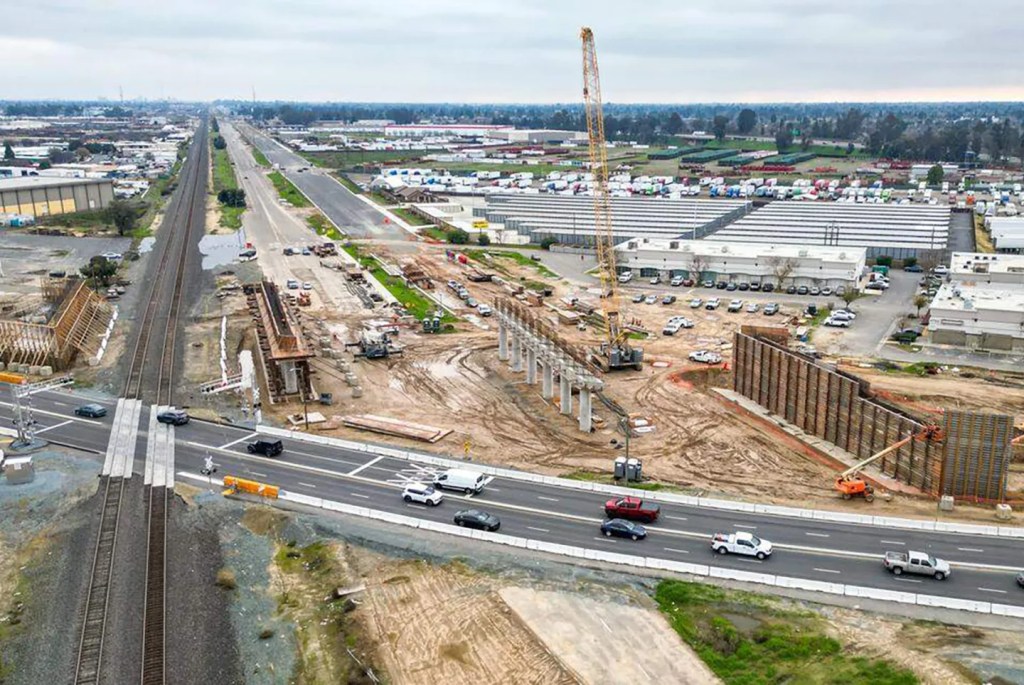
Progressives designed reforms to stop government abuse in the 1960s. Those same protections now make it nearly impossible to build infrastructure.
It’s a structural crisis of capacity with too many veto points & too little authority to build, implement & deliver.
Progressives helped create today’s procedural state as a rational response to top-down abuses, but those reforms hardened into a system that often blocks even broadly popular projects.
Rebuilding trust in government likely depends less on grand narratives and more on doing small things well, faster, and at lower cost, so people can see the state working again.
Their conversation should have mentioned Jane Jacobs and how she caused many of these problems. It’s covered well in the book “Stuck”.
Why America stopped building the ‘starter home’.
Concepts about starter homes seem inconsistent with today’s prices and expansive floor plans, leaving many first-time homebuyers with few options.
Layers of local regulations and market dynamics have pushed builders to go big, rather than cater to first-time buyers.
You have zoning requirements that have encouraged large lot sizes. Home builders, in the wake of the Great Recession, find it easier to build larger homes that have a higher profit margin.
Buyers also want the modern conveniences that go along with larger, pricier homes.
Today, nearly all new houses have at least two full bathrooms, compared with roughly 60 percent in the 1970s.
Modern homes are also far less likely to come with a single vehicle or no garage.
New properties with garages that can accommodate three or more vehicles — nearly unheard of before the 1990s — peaked at 1 in 4 homes in 2015.
The share has since dropped to 1 in 7.
It has become more expensive, almost financially not viable, to build what we thought was a starter home: a 1,000-square-foot home.
They’re now incentivized to build million, million-and-a-half, two-million-dollar homes.
That’s where the profit is for those builders,” said Christian Kosko.
Recently, the “bigger house”-trend has eased a bit.
The share of new two-bedroom homes and smaller homes crept up from 9% in 2022 to 12% in 2024.
The share of new houses under 1,400 square feet and under 1,800 square feet also rose, while the shares above 3,000 and 4,000 square feet declined.
But prices have increased so much that it’s still very difficult to afford a home, especially in markets that don’t allow for building on small lots. When a builder goes in there and tries to actually build something that would sell in today’s market, they just can’t.
Minneapolis, Salt Lake City, and St. Louis are among the cities that have loosened lot-size requirements in recent years. And several states, including Arizona, Utah, Texas, and Colorado, have been trying to craft initiatives to spur the creation of smaller, starter-friendly homes.
Redfin economist Chen Zhao says the limited inventory of starter homes goes beyond the dearth of new construction.
Preexisting homes are not going back on the market as they once would have because many owners don’t want to give up a favorable mortgage rate for a more expensive one.
The number of owners holding onto their houses is more significant at higher price points, though.
People with smaller homes are still moving out as their families grow or needs change.
Redfin’s data shows the housing market is significantly less gummed-up for lower-priced houses, those 5 to 35 percent of the price of the local median.
Home sales in that tier have risen for 14 months straight, and are nearly 5 percent higher year over year.
Sales of those at middle and higher price points have risen less than 1 percent.
Still, people looking for starter homes now are justified in feeling that their predecessors had it easier, Zhao said.
“They got pretty unlucky.”
 Things I Find Interesting [aka, the stuff rattling around inside the brain of Torr Leonard]