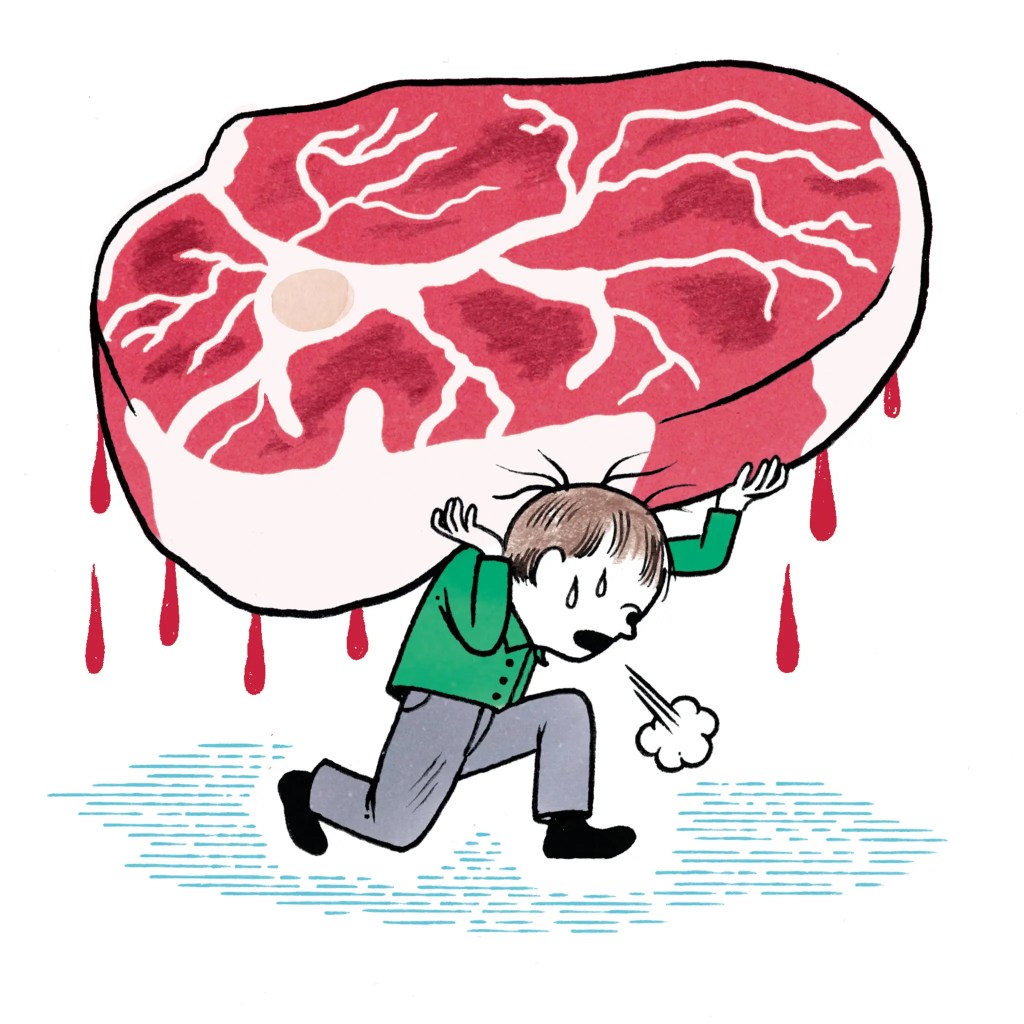
When the Trump administration released its new dietary guidelines, with an emphasis on animal-based proteins and a pyramid featuring images of a bird, steak & beef at the top, it felt a bit like a magic trick: Now you see an environmental crisis, now you don’t.
Whereas earlier guidelines recommended limiting red meat, the new advice explicitly includes it, ignoring the input from an official committee of scientific advisers that called for prioritizing plant-based proteins over animal-based ones.
In extolling meat and dairy, Mr. Kennedy’s not just offering lifestyle advice, but signaling approval for some of the most climate-intensive industries on earth.
Eating less meat remains one of the fastest, easiest, and cheapest ways to cut emissions.
And right now it’s especially important, as many other climate solutions become more expensive, politically fraught, or simply unavailable amid a federal retreat from environmental regulation & support for clean energy.
It requires no new tech, no congressional approval, no subsidies or tax credits.
Some people might prefer to divorce environmental considerations from dietary advice, but amid accelerating climate change, it’s not possible to separate our own health from that of the planet.
Indeed, other countries are already incorporating sustainability factors into their dietary guidelines.
By contrast, our nation’s new food pyramid will mean environmental and health burdens for Americans, even as it benefits the very industries Mr. Kennedy once warned us about.
And the environmental arithmetic isn’t subtle.
According to the World Resources Institute, poultry converts only around 11 percent of the energy contained in livestock feed into human food.
Beef converts only 1 percent of feed energy into human food.
This inefficient system contributes to deforestation, devours water in an increasingly thirsty world, gobbles up vast tracts of land, and drives tremendous greenhouse gas emissions — largely through animals’ digestion and manure, as well as energy-intensive feed production.
Chicken wings may be cheap and look modest on a plate, but their environmental shadow stretches across continents.
If Americans increased their protein intake by just 25 percent in response to the administration’s new recommendations, maintaining their current ratio of animal to plant protein, it would require about 100M acres of additional agricultural land each year — an area larger than MI, OH & PA combined — and increase annual emissions by hundreds of millions of tons of carbon dioxide equivalent, according to the World Resources Institute.
Mr. Kennedy himself once articulated the meat industry’s heavy toll with striking clarity.
The new guidance didn’t emerge from the longstanding Dietary Guidelines Advisory Committee, made up of scientists.
Instead, the Trump admin handpicked a new review panel — the existence of which wasn’t even reported until Wednesday — to “correct deficiencies,” it said, in earlier recommendations.
The result was that the original committee’s advice to emphasize plant-based foods was rejected, while meat and dairy were elevated.
Beyond the environmental damage that could arise from more Americans potentially increasing their meat consumption, which is already well above the global average, the guidance also represents a dangerous divergence from mainstream public-health consensus.
For decades, leading medical and nutrition organizations, including the American Heart Association, have noted that plant-forward diets — rich in fruits, vegetables, legumes, and whole grains — are associated with lower risks of heart disease, Type 2 diabetes, and premature death.
Meat-heavy diets, by contrast, have repeatedly been linked to worse outcomes.
However illogical the administration’s recommendations may be, they become a bit less baffling when one considers the members of the new review panel:
According to disclosures buried in a Dept of Ag report published alongside the guidelines, 2/3 of the reviewers had financial or other ties to beef, dairy, or pork industries, including research funding, consulting fees & leadership roles w/ industry groups like National Cattlemen’s Beef Association, the National Dairy Council & National Pork Board. The panel even included an adviser to the company that owns the meat-focused Atkins diet brand.
All of which feels hypocritical, given Mr. Kennedy’s claims that prior guidelines were driven by industry interests.
Food pyramids may seem quaint, but they shape the content of a great many meals — school lunches, military rations, federal nutrition programs, hospital menus.
 Things I Find Interesting [aka, the stuff rattling around inside the brain of Torr Leonard]