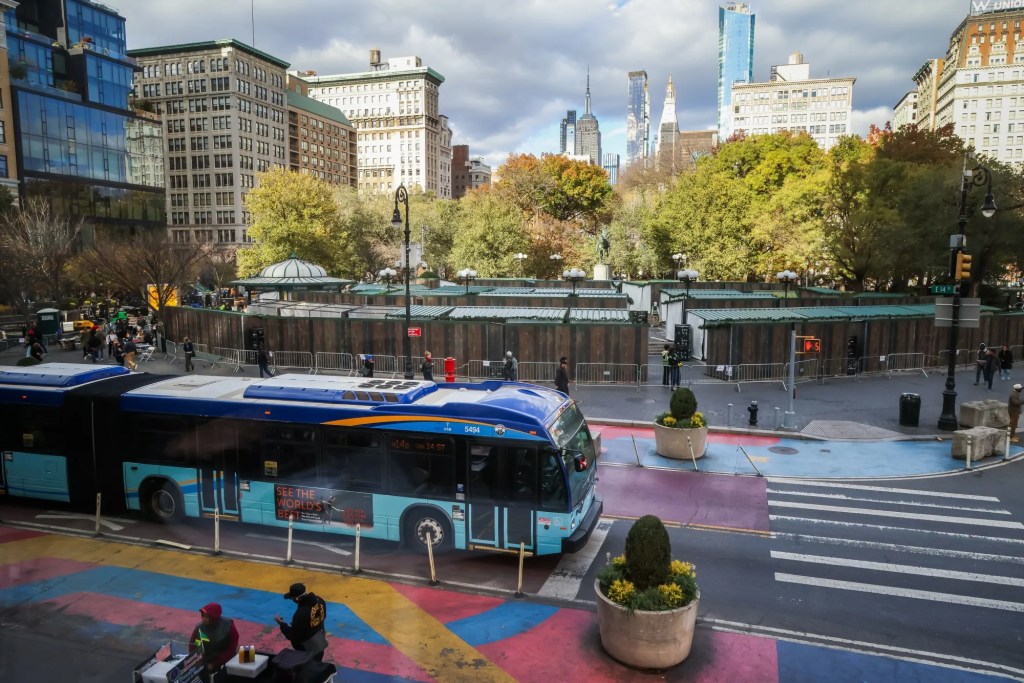
Mayor Mamdani’s two goals are in tension:
Spend such vast sums subsidizing the bus, and there won’t be much left over to improve it, especially at a time when the federal government is undercutting support for transit and the economy is shaky. Under any reasonable estimate, the annual cost to the city of making buses free would be more than transit officials expect to raise this year from congestion pricing in parts of Manhattan.
Mr. Mamdani suggests that the economic benefits of free fares could be twice as large as the costs. That’s hard to evaluate (the figure includes assigning a dollar value to the time you’d save by spending less of it stuck on the bus). His other claim is that eliminating the fare would itself speed up the buses.
That is theoretically true. All those seconds it can take each passenger to root around in a pocket, count out change, or fuss with the card reader — at every stop — add up to real delays. And just one rider doing this can be the difference between making and missing a green light.
But New York’s own pilot program illustrates one hitch. Across all five free routes, ridership increased during the pilot by about 30 to 40 percent, mostly driven by existing riders taking more trips. The buses, however, actually slowed, because all those new riders still had to board the bus and request stops, offsetting the time savings from getting rid of fares.
That’s another complication: If ridership rises substantially, you have to add service to keep up with it, or you may not see any speed benefits. And that costs money, too.
Further reading:
With Mamdani, the Humble Bus Gets Its Due – Voters’ enthusiasm for may reflect a little-understood reality about the essential role of buses. Still, making them faster won’t be easy.
 Things I Find Interesting [aka, the stuff rattling around inside the brain of Torr Leonard]