From 2020-2025, Ned Donovan served on a Metropolitan Police emergency response team in London.
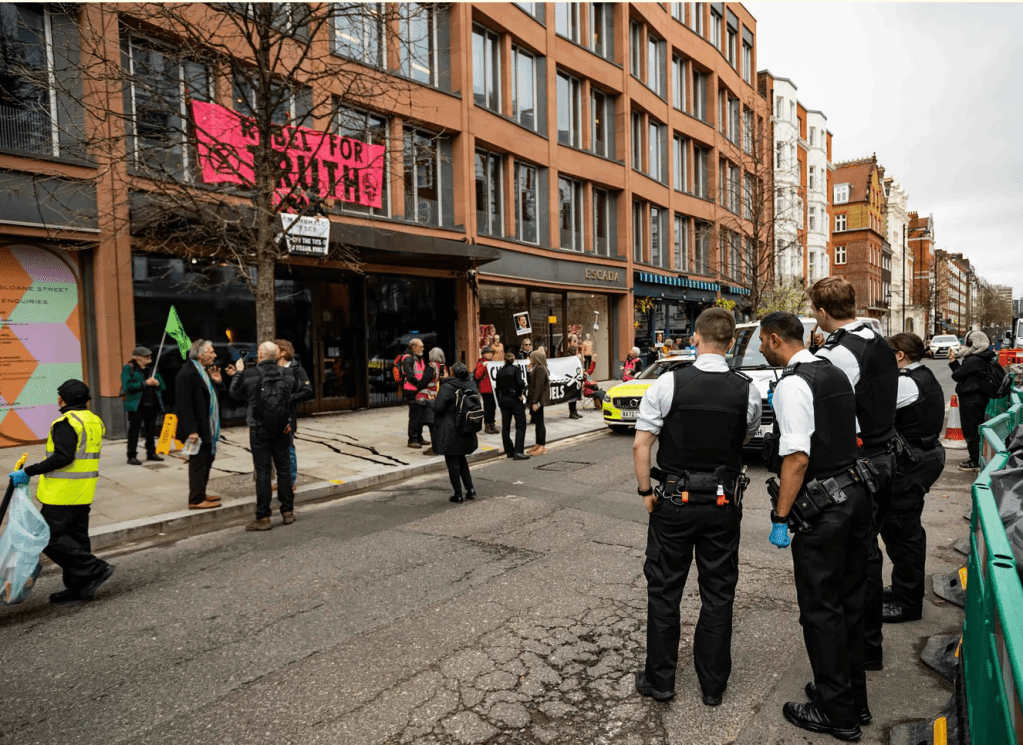
The Met dresses as it always has: stiff white shirt, black tie, dark trousers. Then the reality of this century gets bolted on top: stab vest, radio, a body-worn video camera with a little red blinking light. Our belts hold an extending baton, metal cuffs, a tourniquet, and a small can of pepper spray.
Unlike most countries, almost all British frontline officers do not carry firearms. Some will clip on a Taser; it isn’t mandatory.
On a call that day, my partner and I check out a potential domestic incident, which turns out to be an overly loud argument; they arrive too late to prevent a phone-snatching, but break up a fight and arrest a man wielding a broken bottle.
The child on the stairs gets a stuffed dinosaur rescued from under a radiator dripping with the thrown breakfast. I’m forced to play at being a psychiatrist without a degree and a parent without having a child.
No guns on our hips, so authority is posture and choreography. Angles that keep us safe without announcing themselves and can keep a reactionary gap as best as a tiny London council flat can.
The baton is there to open letter boxes; all we really have is our voices and hands, and if shit really hits the fan, there is the orange emergency button on the radio that alerts the whole borough with a heart-stopping tone. In those first twenty seconds of turning up on scene, you know whether it will be an arrest, safeguarding, or waiting for an ambulance, or all of the above.
Not all our calls are crime. Many are crises with administrative clothing. The LAS are the London Ambulance Service and are equally short-staffed, with much of what they can’t handle left to the Met.
The police have become Britain’s social service of last resort, dropped into people’s worst five minutes with no backstory and every expectation to fix things.
 Things I Find Interesting [aka, the stuff rattling around inside the brain of Torr Leonard]